

Newfoundland and Labrador has a distinctive visual culture shaped by outport histories, the Atlantic coast, changing communities, domestic life, and artists who worked both within and beyond the province. This guide introduces five widely recognized artists connected to that history: David Blackwood, Maurice Cullen, Robert Pilot, Christopher Pratt, and Mary Pratt.
This is a curated introduction, not a definitive ranking of the best or most famous Newfoundland artists. Four of the five were born in Newfoundland. Mary Pratt was born in Fredericton, New Brunswick, then moved to Newfoundland in the 1950s and built most of her career there. Including her reflects artistic practice and place, not birthplace alone.
Each artist is represented below by a portrait and two works, showing the range of subjects and approaches within these five careers.
How These Five Artists Fit Newfoundland and Labrador Art
These artists do not form a single school. Blackwood developed narrative prints rooted in Wesleyville memories and oral traditions. Cullen and Pilot brought forms of Impressionism to Canadian winter and urban subjects, often in Quebec. Christopher Pratt used controlled geometry and realism to examine Newfoundland places, buildings, roads, and memory. Mary Pratt transformed domestic objects and people through close observation, photography, and a highly developed treatment of light.
Together, they show why the phrase Newfoundland artist needs context. It can refer to birthplace, long residence, subject matter, artistic community, or a sustained engagement with the province. Readers looking for a broader view should also explore Gerald Squires, Helen Parsons Shepherd, Reginald Shepherd, Anne Meredith Barry, Barbara Pratt, and many living artists working across Newfoundland and Labrador.
1. David Blackwood (1941 to 2022)
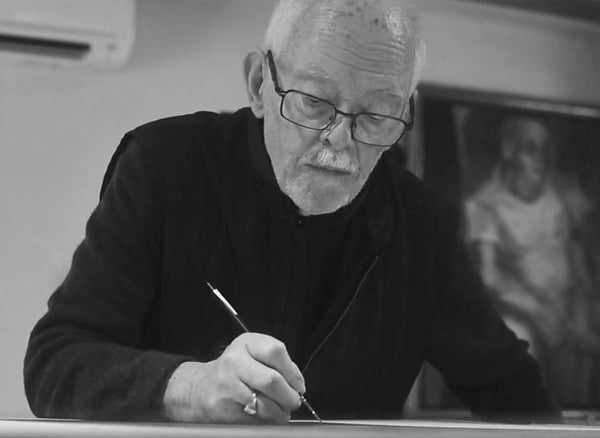
David Blackwood was born and raised in Wesleyville on Bonavista Bay. The Art Gallery of Ontario describes his art as drawing on childhood memories, dreams, superstitions, legends, oral traditions, and the political realities of his community. After studying printmaking at the Ontario College of Art, he settled in Port Hope, Ontario, while continuing to return to Newfoundland.
Blackwood is best understood as a printmaker and visual storyteller, not simply as a painter of dramatic coastal scenery. His intaglio practice allowed him to build dense tonal fields, sharp silhouettes, and layered narratives. Fishing, sealing, resettlement, mummering, storms, ice, and community memory recur across his work, but these subjects are filtered through recollection and imagination rather than presented as neutral historical records.
Two Works by David Blackwood
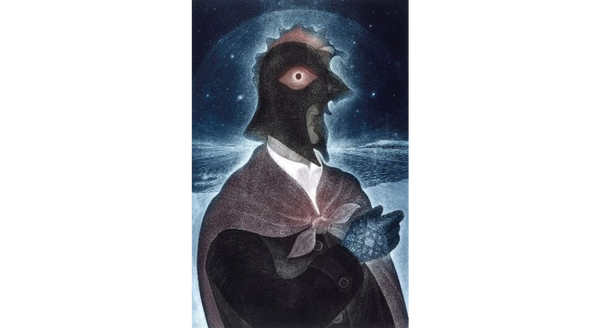
Portrait of Heber Fifield as a Great Mummer belongs to Blackwood's sustained engagement with Newfoundland mummering. The disguised figure is immediately theatrical, but the work should not be reduced to a generic illustration of a Christmas custom. It is a named portrait within Blackwood's larger archive of remembered people, stories, and community practices.
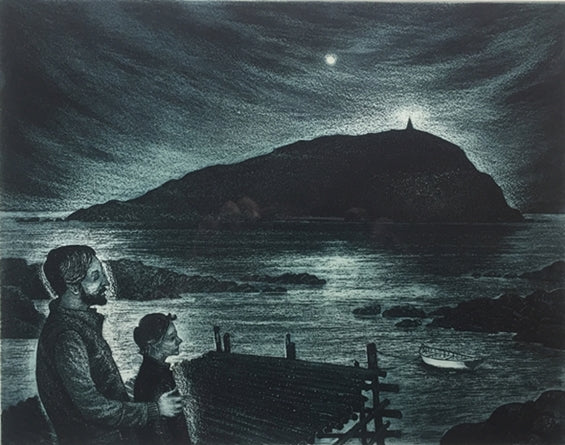
In Night Island, a dark landform and small beacon dominate the horizon while two figures occupy the foreground. The scene demonstrates Blackwood's ability to use scale, restricted colour, and open water to suggest narrative without resolving it. The safest reading begins with what is visible and then considers how the image relates to his broader interest in coastal memory and storytelling.
2. Maurice Cullen (1866 to 1934)
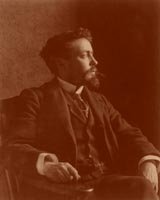
Maurice Cullen was born in St. John's and received early art training in Montreal before studying in Paris. The Art Canada Institute places him among the Canadian artists who adapted Impressionist approaches to Canadian subjects. He became particularly important for winter landscapes and urban scenes in which snow, water, atmosphere, and changing light carry as much weight as the depicted activity.
Cullen's connection to Newfoundland is biographical, but much of the work for which he is known was made in Quebec and elsewhere. That distinction matters. Calling him a Newfoundland-born artist is accurate. Treating all of his subjects as Newfoundland scenes is not.
Two Works by Maurice Cullen
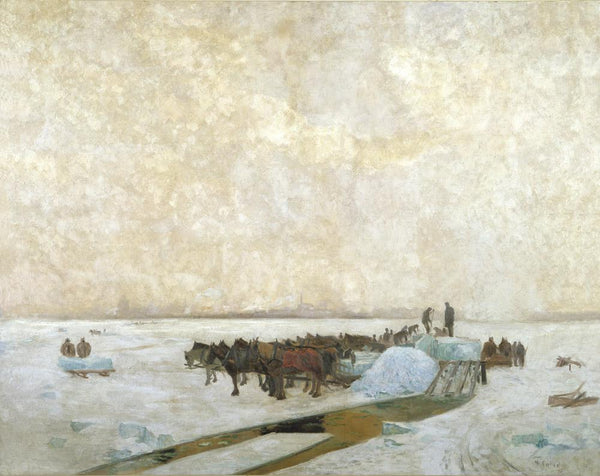
Ice Harvest shows people and horses working on a frozen river beneath a broad, luminous sky. The Montreal Museum of Fine Arts explains Cullen's interest in the changing effects of light and winter atmosphere. The painting is useful precisely because it combines labour and landscape. The workers are not incidental decoration, and the snow is not a single field of white.
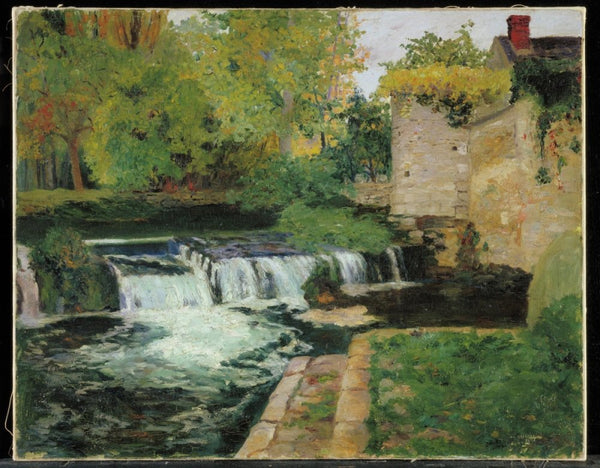
The Mill Stream, Moret dates from Cullen's years in France. Its broken brushwork, moving water, and closely observed colour help explain what he later brought to Canadian landscape painting. It also prevents an overly narrow account of his career. His winter scenes were part of a practice developed through international training and travel.
3. Robert Pilot (1898 to 1967)
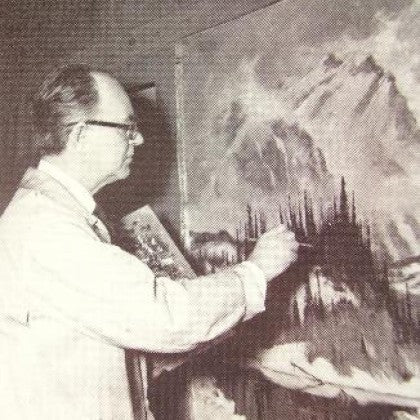
Robert Wakeham Pilot was born in St. John's. At age 12 he moved to Montreal after his mother married Maurice Cullen. He assisted Cullen, joined sketching trips, studied under William Brymner, and later attended the Académie Julian in Paris. The Sobey Art Foundation notes that Pilot exhibited in the first Group of Seven exhibition in 1920 but did not join the group.
Pilot often painted inhabited places rather than presenting wilderness as an emblem of national identity. Quebec streets, ferries, harbours, farms, snow, and twilight became recurring subjects. His Newfoundland birth is important, but so are Montreal, Quebec, European study, and his service in both world wars.
Two Works by Robert Pilot
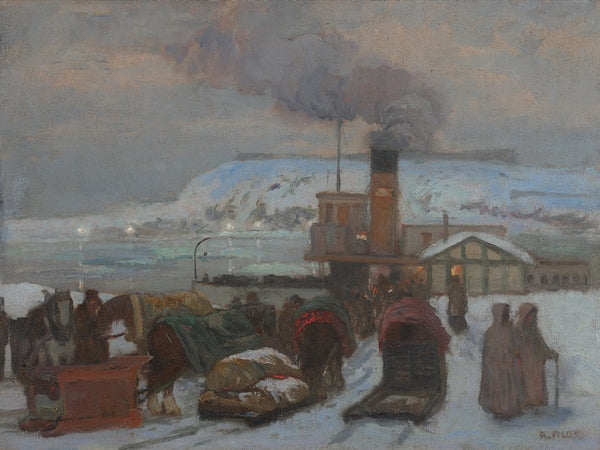
This work has also circulated under a descriptive label about waiting for the Lévis ferry. The documented title is Meeting the Ferry at Quebec. People and draft horses gather near the winter crossing, and the ferry infrastructure anchors the scene. The painting joins atmosphere to ordinary movement through an inhabited landscape.
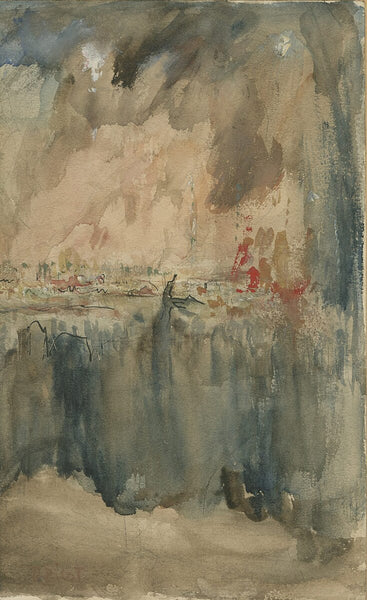
War Scene dates to 1918, during the First World War. Its loose washes and compressed marks differ sharply from Pilot's later, more settled urban and winter scenes. Without evidence for a specific battle, it is best understood as a small wartime study whose title, date, medium, and collection are documented.
4. Christopher Pratt (1935 to 2022)
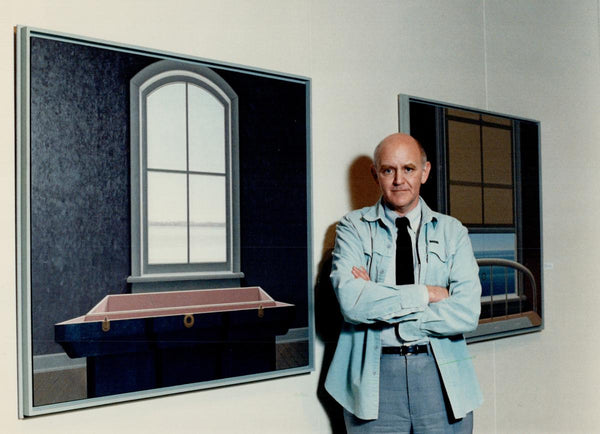
Christopher Pratt was born in St. John's and spent much of his life along the Salmonier River in St. Mary's Bay. The Art Canada Institute describes his work as a sustained observation of Newfoundland and Labrador's culture, geography, weather, landscapes, architecture, waterscapes, and people. His realism is highly selective: forms are clarified, spaces are controlled, and familiar places can feel suspended outside ordinary time.
Pratt was both a painter and printmaker. He also designed Newfoundland and Labrador's provincial flag in 1980. That public role is important, but his art is more than an inventory of provincial symbols. Buildings, roads, shorelines, boats, and interiors become structures through which he considered memory, change, and place.
Two Works by Christopher Pratt

The National Gallery of Canada acquired this large painting in 2013. It depicts the abandoned control-tower building at the former military base at Argentia, a place Pratt knew from summer work as a surveyor in the 1950s. The earlier article mistakenly described an interior and gave an inaccurate demolition claim. What the image actually presents is a frontal exterior, simplified into horizontal bands beneath a heavy sky.
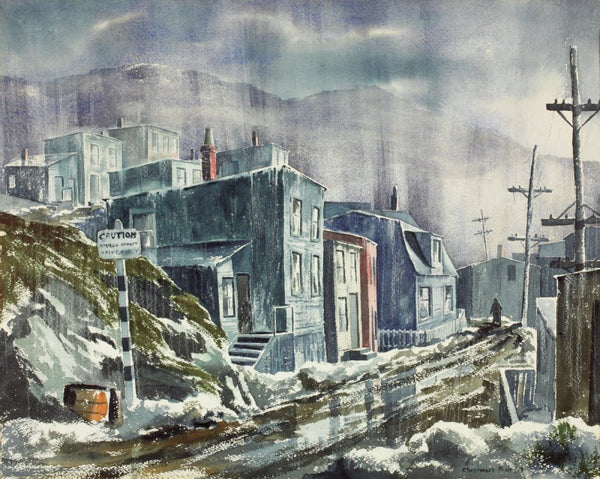
Battery Road is an early work, made before the austere precision associated with Pratt's mature career. Its wet street, utility poles, compressed buildings, and active watercolour handling record a St. John's subject through a younger artist's developing language. Seeing it beside the 2013 Argentia painting makes the span of his career visible rather than assuming that his style remained fixed.
5. Mary Pratt (1935 to 2018)
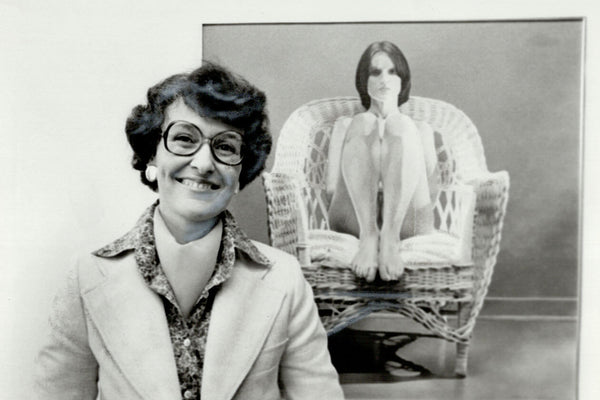
Mary Pratt was born in Fredericton and studied at Mount Allison University. She moved to Newfoundland in the 1950s and developed a major career from her homes in Salmonier and St. John's. The Art Canada Institute identifies her as one of Canada's leading realist painters, known for transforming domestic objects and everyday moments through colour, close description, and light.
Photography was central to Pratt's process. She often worked from 35 mm slides, which let her return to fleeting arrangements of light after the original moment had passed. Calling the results photographic does not explain the paintings by itself. Selection, projection, cropping, colour, scale, and the long delay between photograph and finished work were all part of how she constructed an image.
Two Works by Mary Pratt
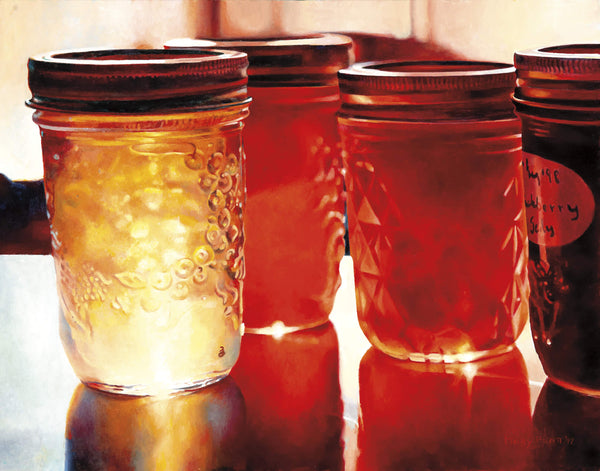
Jelly Shelf turns preserved fruit and glass jars into a study of transmitted and reflected light. The Art Canada Institute connects the subject to Pratt's childhood memory of sunlight passing through her mother's jelly jars. The painting's value does not depend on treating domestic work as merely nostalgic. It asks the viewer to look closely at colour, labour, storage, memory, and the visual intensity of an ordinary kitchen object.
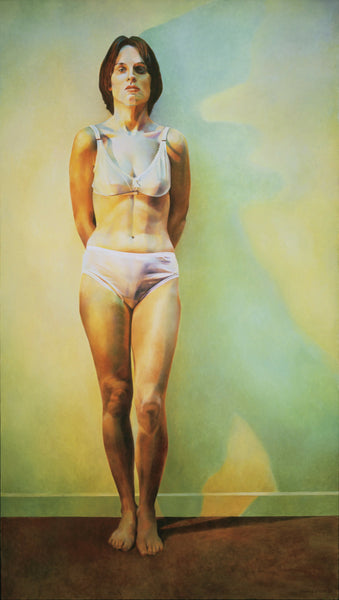
This Is Donna belongs to Pratt's extended series of paintings of Donna Meaney. The Art Canada Institute records that this image began with a photograph made by Christopher Pratt, then became Mary Pratt's own painting years later. The figure's direct presence and the complicated relationship between photographer, painter, subject, and viewer are central to the work. A responsible account can acknowledge that context without turning the people involved into gossip.
What to Look for Across the Five Artists
- Place is not one thing. Newfoundland appears as remembered outport, biography, built environment, domestic setting, and long-term artistic community.
- Medium changes meaning. Blackwood's etching and aquatint, Cullen and Pilot's oils and watercolours, and the Pratts' carefully controlled paintings create very different kinds of looking.
- Titles and dates matter. They can prevent a work from being assigned to the wrong war, location, period, or phase of an artist's career.
- Observation is not neutral. Even realist and documentary-looking works involve selection, memory, cropping, omission, and interpretation.
To continue exploring in person, start with public collections and curatorial research rather than sales listings alone. The Rooms in St. John's, the National Gallery of Canada, the Art Gallery of Ontario, the Montreal Museum of Fine Arts, and the Beaverbrook Art Gallery all hold or interpret relevant work. Our guide to art galleries in Newfoundland and Labrador offers a practical next step, but always check each institution's current exhibition information before travelling.
Sources and Further Reading
- Art Gallery of Ontario, David Blackwood: Myth & Legend
- Montreal Museum of Fine Arts, Maurice Cullen, Ice Harvest
- Sobey Art Foundation, Robert Pilot
- Canadian War Museum, Robert Pilot, War Scene
- Art Canada Institute, Christopher Pratt: Life & Work
- National Gallery of Canada, Argentia: The Ruins of Fort McAndrew: After the Cold War
- National Gallery of Canada, Christopher Pratt, Battery Road
- Art Canada Institute, Mary Pratt key works





3 comments
Thank you for introducing me to 5 unique and talented artists who all have a connection to NL, a place I love dearly.
As usual NL claims and endorses artists as their own who are either born somewhere else and move to NL to become inspired by the province, or who are born here and then move away to gain success outside the province (or country depending on the era).
Mary Pratt was an adopted NL artist who married a true native artist, while Cullen and Pilot, though born here both moved away to Montreal in their youth (Pilot at 12 and Cullen at 4) and generally painted subjects other than NL.
Newfoundland and Labrador has lots of “born and raised” artists who, along with Christopher Pratt and David Blackwood, need to be promoted for their artistic depictions of their home.
Sadly we continue this notion of elevating “come from aways” who paint our province or NL-born artists who move away to get recognition, on lists of “Newfoundland and Labrador artists” and ignore NL artists who stay home, express their love of their home in their art, and try to share that aesthetic affection with the world. Please give more credit to actual NL artists who live in and paint the home they love!!
As usual NL claims and endorses artists as their own who are either born somewhere else and move to NL to become inspired by the province, or who are born here and then move away to gain success outside the province (or country depending on the era).
Mary Pratt was an adopted NL artist who married a true native artist, while Cullen and Pilot, though born here both moved away to Montreal in their youth (Pilot at 12 and Cullen at 4) and generally painted subjects other than NL.
Newfoundland and Labrador has lots of “born and raised” artists who, along with Christopher Pratt and David Blackwood, need to be promoted for their artistic depictions of their home.
Sadly we continue this notion of elevating “come from aways” who paint our province or NL-born artists who move away to get recognition, on lists of “Newfoundland and Labrador artists” and ignore NL artists who stay home, express their love of their home in their art, and try to share that aesthetic affection with the world. Please give more credit to actual NL artists who live in and paint the home they love!!
Leave a comment